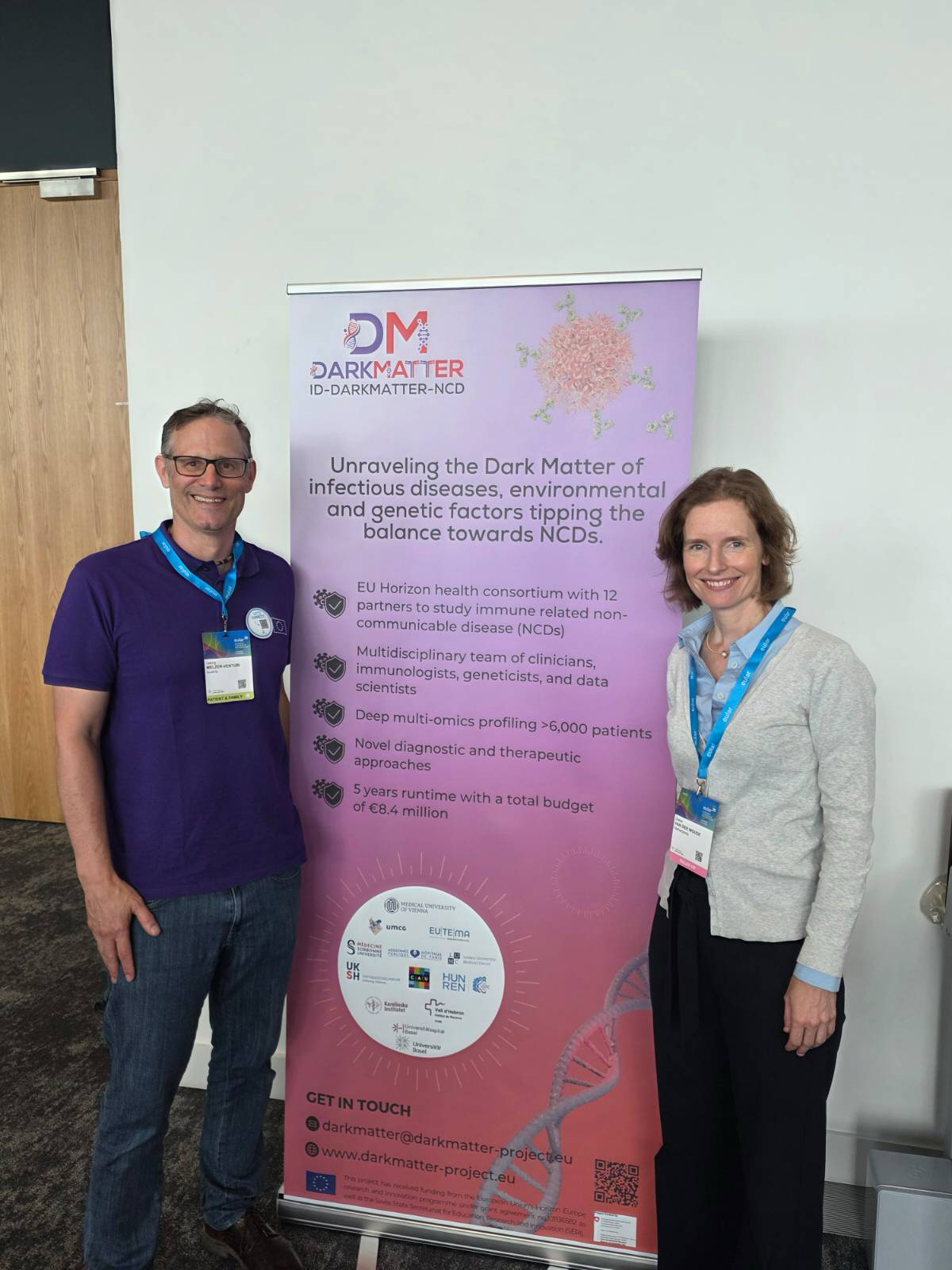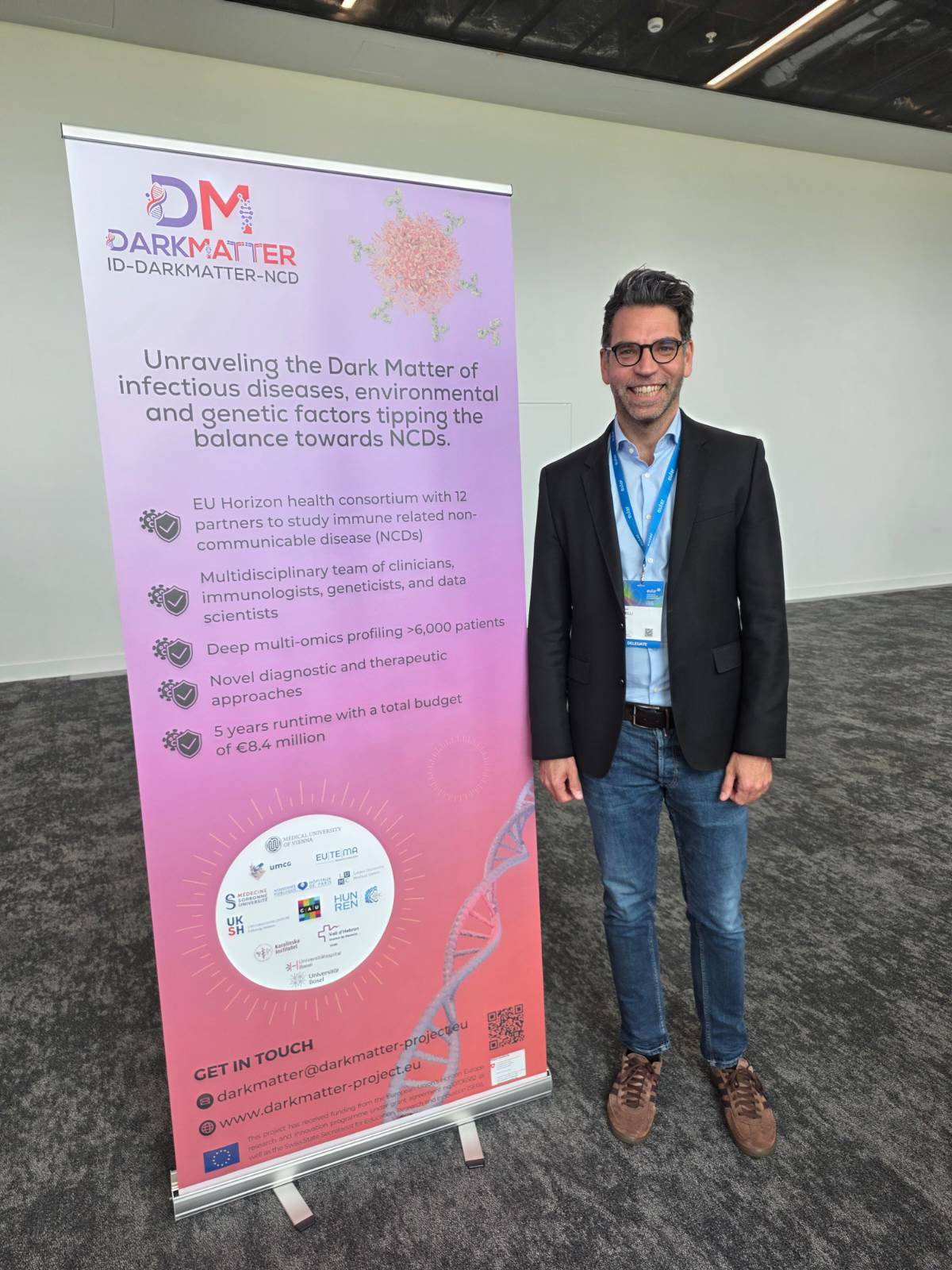
The Horizon Europe project ID-DarkMatter-NCD was prominently represented throughout the congress, with consortium members contributing as session chairs, invited speakers, scientific experts, and communicators. Their active participation highlighted the project's growing influence in the fields of immunology, rheumatology, and autoimmune disease research.
Scientific Leadership at EULAR
Several leading DarkMatter researchers played key roles in the official scientific programme.
Prof. Michael Bonelli (Medical University ofVienna) chaired the Basic and Translational Science sessions "Epigenetic Modulation – New Horizon in RMDs" and "How do cells build their home – Structural Immunity in RA". These sessions explored emerging concepts in epigenetics, cellular interactions, and inflammatory mechanisms that are shaping the future of rheumatic disease research.
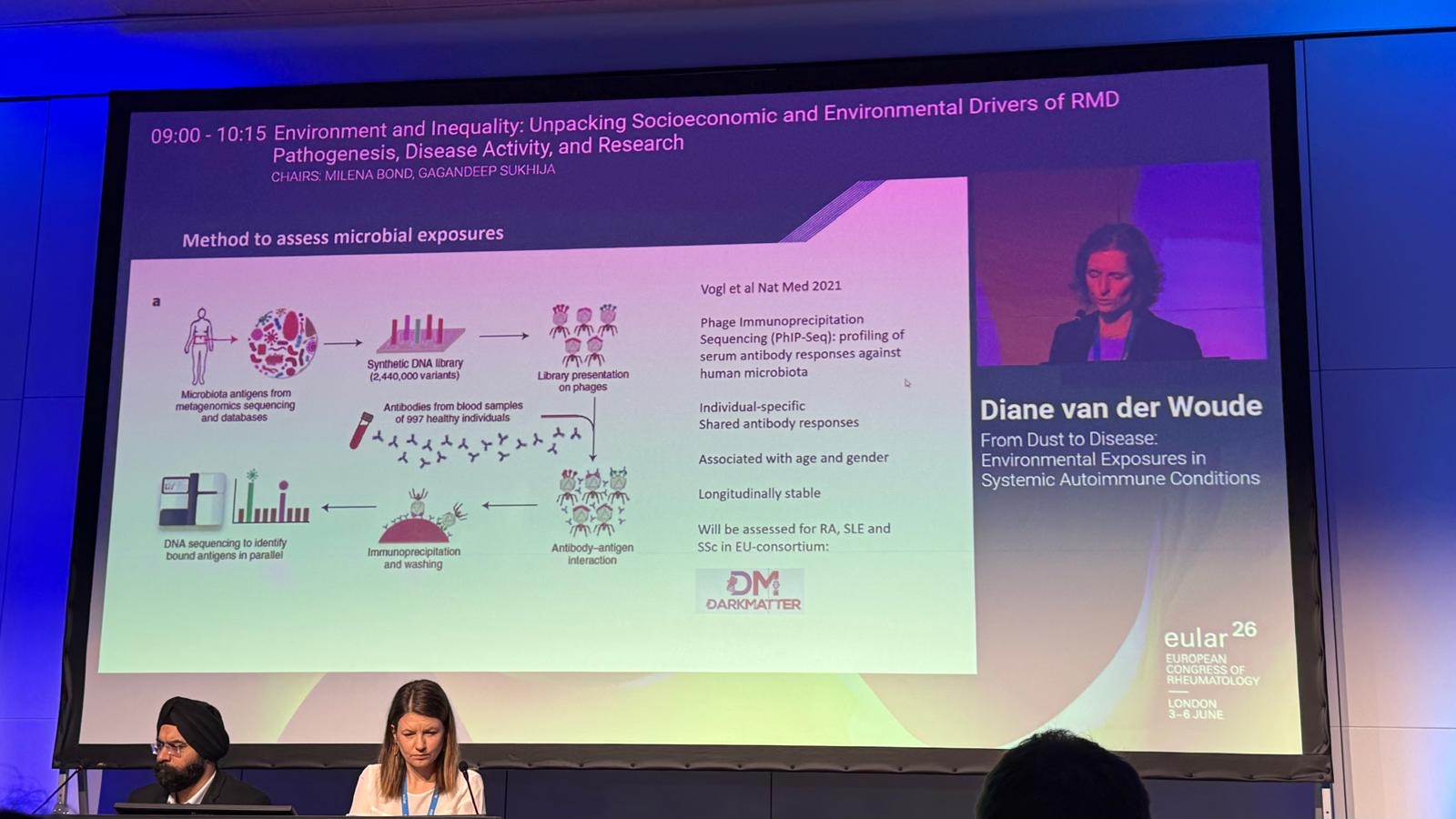
Prof. Diane van der Woude (Leiden UniversityMedical Center) also contributed extensively to the programme. She chaired the EULAR Projects session "TheFOREUM Dive into Mechanisms of RMDs" and the Oral Abstract Session "Biomarkers i n RMDs", bringing together experts to discuss novel insights into disease mechanisms, early disease processes, and biomarker development.
In addition, Prof. van der Woude delivered invited presentations on two highly relevant topics:
- Novel Antibodies in Inflammatory Joint Disease, focusing on emerging antibody discoveries and their practical implications for rheumatic diseases.
- From Dust to Disease: Environmental Exposures in Systemic Autoimmune Conditions, examining how environmental factors may contribute to the development and progression of autoimmune diseases.
Together, these contributions reflected many of the scientific themes at the heart of DarkMatter: understanding immunedys regulation, identifying disease triggers, discovering biomarkers, and improving disease prediction and personalised care.
Strengthening the Visibility of DarkMatter
Beyond scientific presentations, EULAR provided an important opportunity to increase awareness of the DarkMatter project among the international rheumatology community.
Throughout the congress, consortium members engaged with researchers, clinicians, patient representatives, healthcare stakeholders, and industry partners, discussing the project's innovative approach to investigating the hidden immune mechanisms that contribute to chronic inflammatory and autoimmune diseases.
These exchanges generated valuable opportunities for collaboration while helping to disseminate project objectives, methodologies, and emerging findings to key target audiences.
The project's visibility at EULAR was further strengthened through the active involvement of EUTEMA, which coordinated communication and dissemination activities surrounding the congress.
By translating complex scientific advances into accessible and engaging content, EUTEMA helps ensure that DarkMatter'sdiscoveries reach not only researchers but also healthcare professionals, patient communities, policymakers, and the wider public.
Looking Ahead
The strong presence of DarkMatter at EULAR2026 demonstrates the consortium's commitment to scientific excellence, interdisciplinary collaboration, and effective communication.
From chairing high-profile scientific sessions and presenting cutting-edge research to engaging diverse stakeholder communities, DarkMatter partners continue to advance understanding of the hidden drivers of immune-mediated diseases.
The knowledge exchanged, collaborations initiated, and visibility achieved during EULAR 2026 will continue to support the project's mission of uncovering the "dark matter" of autoimmune and inflammatory diseases and translating these discoveries into meaningful benefits for patients.
We thank all DarkMatter researchers, partners, and communication teams who contributed to making EULAR 2026 such a successful and impactful event for the project. See you at EULAR 2027 in Berlin!