

Bringing together Europe's expertise to decode the "darkmatter" of immune-mediated diseases
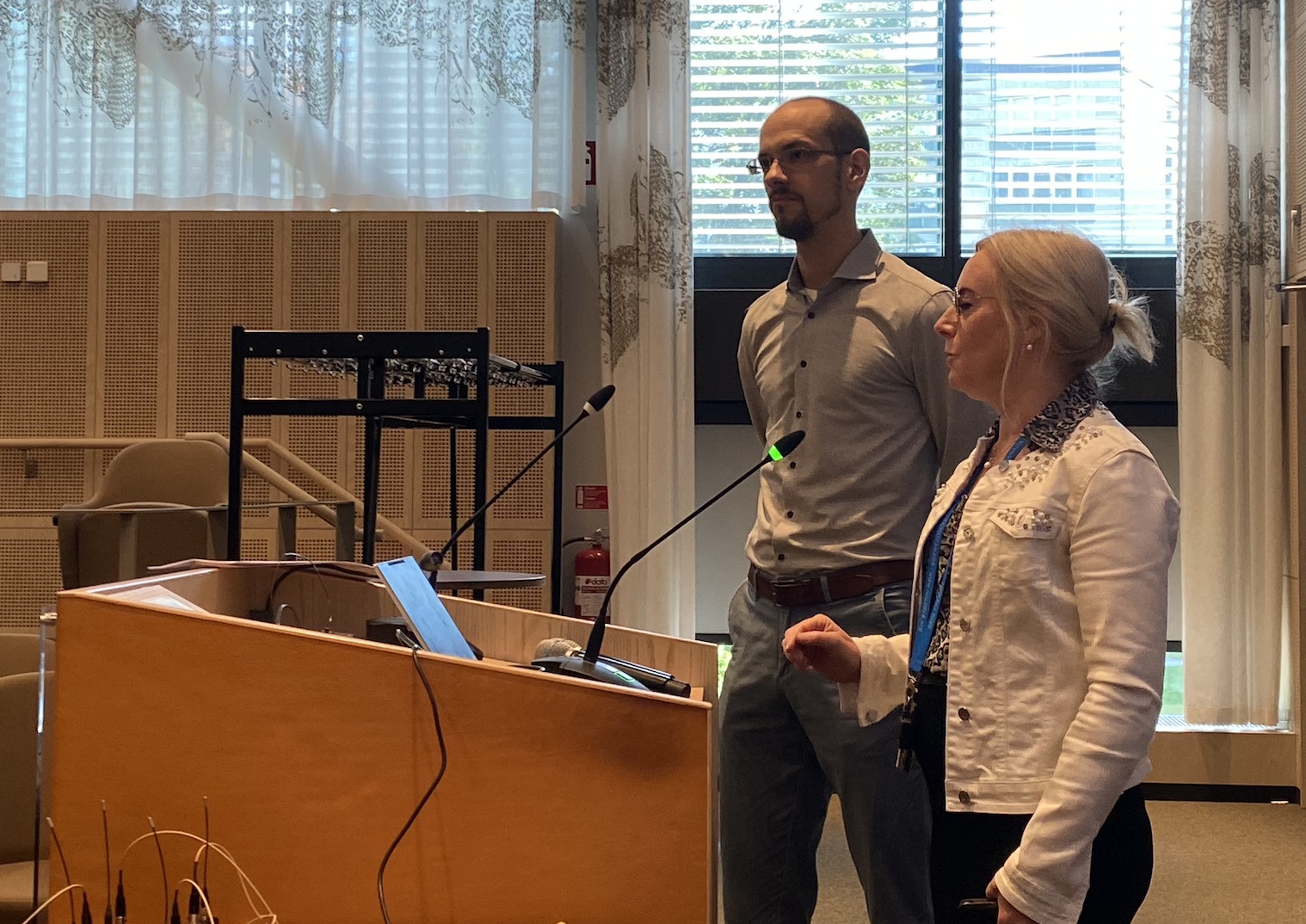
Held as part of theHorizon Europe project ID-DarkMatter-NCD, the public symposium formed the scientific centrepiece of the consortium's General Assembly at Karolinska Institutet in Stockholm. Hosted by Prof. Gunilla Karlsson Hedestam, the meeting welcomed researchers from across Europe together with invited experts to discuss the latest advances in understanding autoimmune and inflammatory diseases.
Opening the symposium,DarkMatter Coordinator Prof. Thomas Vogl reflected on the project's progress as it reaches its halfway point. Bringing together clinicians, immunologists, geneticists, computational biologists and data scientists, the consortium is investigating diseases including rheumatoid arthritis (RA), inflammatory bowel disease (IBD), multiple sclerosis (MS), systemic lupus erythematosus(SLE), systemic sclerosis (SSc), myositis, long COVID and ME/CFS.
Although many of these conditions have long been associated with infections or immune dysregulation, fundamental questions remain unanswered. Why does Epstein-Barr virus trigger multiple sclerosis in only a tiny fraction of infected individuals? Why do some people develop chronic inflammatory disease after viral infections, while others recover completely? What genetic and environmental factors determine susceptibility?
These unanswered questions—the project's "dark matter"—are the focus of the consortium's research.
Combining genetics, immunology and large patient cohorts
A recurring theme throughout the symposium was that no single factor explains autoimmune disease.
Instead, DarkMatter combines several complementary approaches:
- large, deeply characterised patient cohorts from across Europe;
- pre-diagnostic samples collected years before disease onset;
- high-throughput antibody profiling using PhIP-Seq;
- immunogenetics, including HLA and immunoglobulin gene variation;
- multi-omics technologies;
- advanced computational and machine-learning approaches.
By integrating these layers, researchers aim not only to identify infectious triggers but also understand how inherited genetic variation shapes immune responses and ultimately disease risk.
Prof. Vogl also highlighted one of DarkMatter's greatest strengths: access to more than 6,000 patient samples, including unique longitudinal cohorts that allow researchers to investigate immune changes before disease develops. Such cohorts provide an unprecedented opportunity to identify early biomarkers, understand disease causality and ultimately improve prediction and prevention.
Rheumatoid arthritis: understanding how disease begins
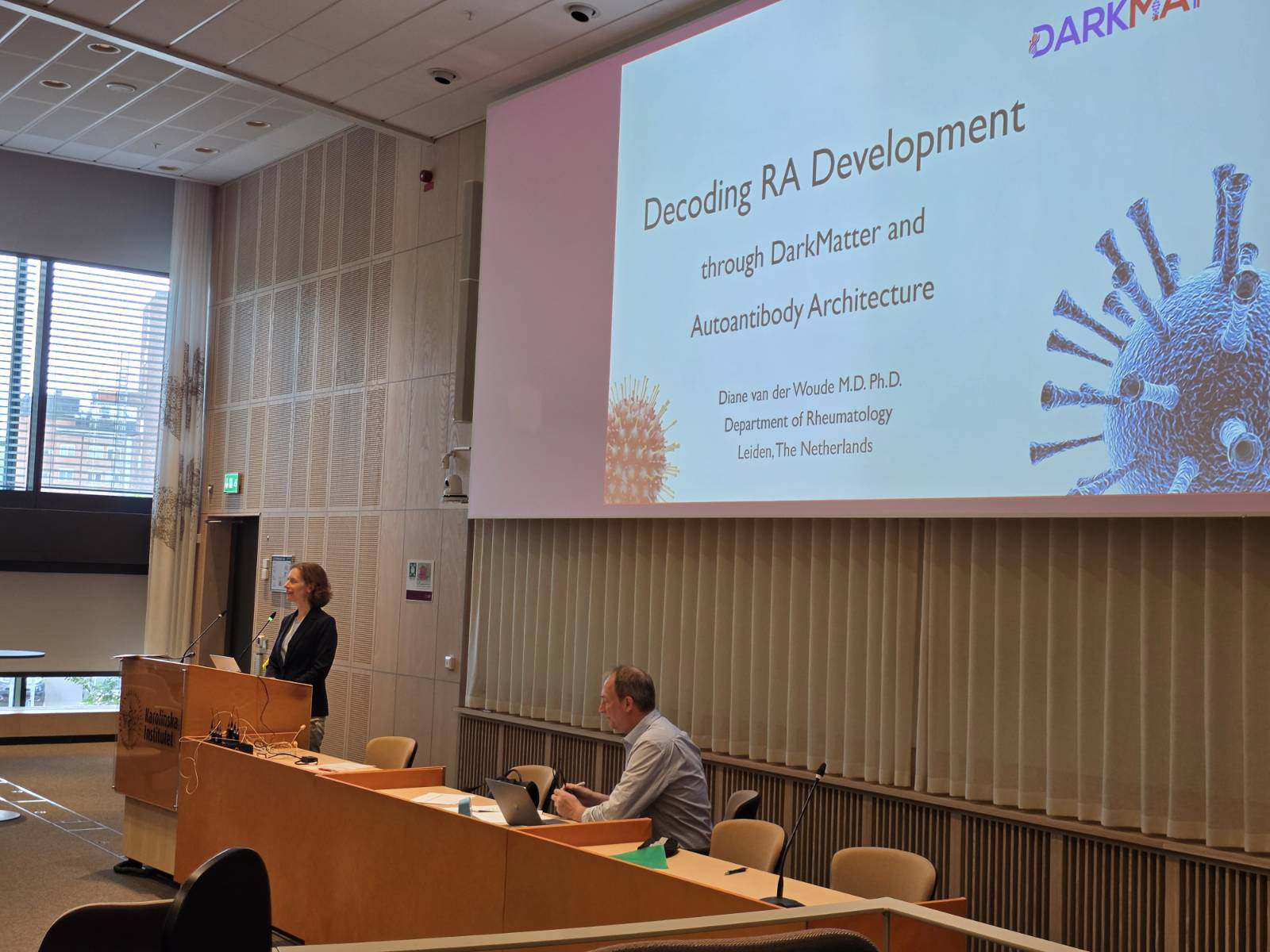
The first scientific session focused on autoimmune rheumatic diseases, with Prof. Diane van der Woude (Leiden University Medical Center) presenting DarkMatter's strategy for investigating rheumatoid arthritis and related conditions.
The project examines four major autoimmune rheumatic diseases:
- rheumatoid arthritis,
- systemic lupus erythematosus,
- systemic sclerosis,
- inflammatory myopathies.
By analysing thousands of patient samples across these diseases, researchers hope to identify both disease-specific and shared immune signatures.
Autoantibodies as windows into disease development
A major focus of Prof. van der Woude's presentation was the remarkable insight provided by autoantibodies.
In rheumatoid arthritis, these antibodies often appear five to ten years before clinical symptoms, making them one of the earliest measurable indicators that disease is developing.
Rather than representing a single event, RA appears to evolve through several distinct stages:
- an initial loss of immune tolerance;
- gradual maturation of the autoantibody response;
- expansion of antibody specificities;
- eventual onset of inflammatory joint disease.
This timeline offers a unique opportunity to investigate where environmental exposures—including microbial triggers—may influence disease progression.
Genetics and environmental exposures work together
The presentation also illustrated how genetic susceptibility and environmental factors interact throughout disease development.
Certain HLA variants strongly influence which autoantibodies patients develop, while smoking appears to play an important role during the earliest stages of immune activation.Importantly, these effects differ depending on the type of autoantibody involved, suggesting that rheumatoid arthritis may consist of several distinct biological pathways rather than a single disease mechanism.
DarkMatter aims to determine whether microbial exposures contribute at specific stages of this process and whether they interact with genetic risk factors to influence disease onset.
Looking deeper into the adaptive immune response
The invited keynote by Prof. Vivianne Malmström (Karolinska Institutet) expanded on these concepts by exploring the adaptive immune system—the coordinated actions of B cells, T cells and antibodies—in rheumatoid arthritis.
Her work follows immune responses across the entire disease course, from individuals at risk ofRA through to newly diagnosed patients and those with long-standing disease.

Following immune cells before disease appears
One of the most striking findings presented was that important immune changes are already detectable long before arthritis develops.
Studies of individuals at increased risk showed that immune activity is already taking place in tissues such as the lungs, where specialised B cells display characteristics remarkably similar to those found after disease onset. These cells produce highly mutated antibodies capable of recognising multiple citrullinated proteins—a hallmark of rheumatoid arthritis.
The research also demonstrated that smoking influences not only whether autoantibodies develop, but also the type of antibody response generated, reinforcing the complex interplay between environmental exposures and genetic susceptibility.
T cells may hold additional answers
Beyond antibodies, Prof. Malmström presented new work investigating auto-reactive T cells within inflamed joints and among individuals at risk of disease.
Her team identified expanded T-cell populations recognising both self-antigens and viral targets, including Epstein-Barr virus and cytomegalovirus, highlighting the possibility that infectious exposures may shape immune responses within inflamed tissues.While the precise significance of these findings remains under investigation, they provide intriguing clues about how infections could contribute to chronic autoimmune inflammation.
Another important observation concerned HLA diversity. Individuals carrying two different rheumatoid arthritis-associated HLA alleles appear capable of presenting a broader range of self-peptides to the immune system, potentially increasing the likelihood of generating auto reactive T-cell responses. This work provides new insight into why certain genetic combinations confer particularly high disease risk.
Building a more complete picture of autoimmune disease
The morning's discussions highlighted how autoimmune diseases emerge through a complex interaction of genetics, immune regulation and environmental exposures rather than a single triggering event.
By integrating immunology, genetics and longitudinal patient cohorts, DarkMatter aims to identify the earliest events that precede disease onset—and ultimately pave the way for earlier diagnosis, improved risk prediction and more personalised therapeutic strategies.
In Part 2, we explore how the symposium turned its attention to inflammatory bowel disease, multiple sclerosis and cutting-edge advances in immunogenetics, including new insights into viral exposures, the gut microbiome andHLA-mediated disease susceptibility.
Missed the symposium or would like to revisit the presentations?
Watch the full recording below to hear directly from the speakers as they present the latest DarkMatter research on autoimmune and inflammatory diseases, from early immune signatures and immunogenetics to the role of infections, the microbiome and environmental triggers in disease development.
https://youtu.be/HeNgGGnCfRA