


Detecting inflammatory bowel disease before symptoms appear
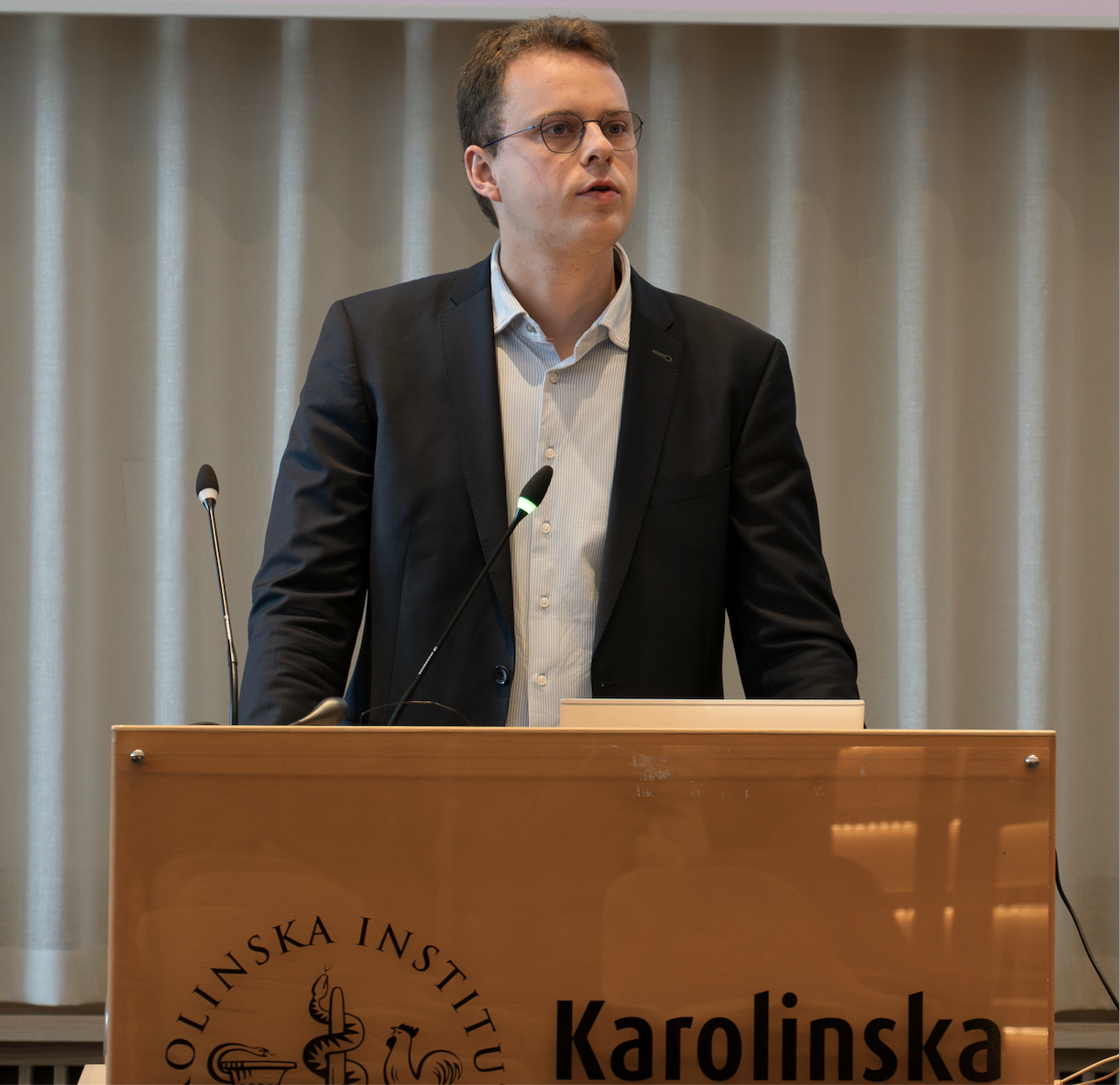
The symposium then shifted its focus to inflammatory bowel disease (IBD), where Dr Arno Bourgonje (University Medical Center Groningen) presented how DarkMatter is using large-scale antibody profiling to identify immune signatures that emerge long before clinical diagnosis.
Inflammatory bowel disease—including Crohn's disease and ulcerative colitis—is characterised by chronic inflammation of the gastrointestinal tract and a disrupted intestinal barrier. As this barrier becomes compromised, immune cells encounter a vast range of microbial antigens from the gut microbiome, triggering antibody responses that may provide important clues to disease development.
Using PhageImmunoprecipitation Sequencing (PhIP-Seq), researchers analysed antibody responses against more than 300,000 microbial and environmental antigens, providing one of the most comprehensive pictures yet of the human antibody repertoire in IBD.
Previous work had already revealed distinct immune signatures in patients with established disease, including strong antibody responses against bacterial flagellins, herpesviruses and several microbial proteins. The next challenge was determining whether these signatures arise only after disease develops—or whether they are already present beforehand.
Looking years before diagnosis
To answer this question, the team turned to one of the Netherlands' largest population studies, Lifelines, which follows more than 160,000 participants over many years.
By identifying individuals who later developed IBD, researchers were able to analyse blood samples collected before diagnosis, offering a rare glimpse into the earliest stages of disease development.
The analyses revealed striking differences between the pre-diagnostic and post-diagnostic immune landscapes. Antibody responses to Epstein-Barr virus (EBV) and several other herpesviruses were already elevated before diagnosis, whereas responses to bacterial flagellins increased after disease onset, suggesting that different immune processes dominate at different stages of disease development.
The work also demonstrated that antibody signatures could already distinguish individuals who would later develop Crohn's disease from those who would develop ulcerative colitis, highlighting the potential for future prediction and earlier intervention.
Understanding how immune genetics shapes disease risk
Complementing these functional immune studies, Dr Martin Corcoran (Karolinska Institutet) presented DarkMatter's work on the genetics of adaptive immunity.
Unlike traditional genetic studies that focus on individual variants, this research examines variation within the genes that encode B-cell and T-cell receptors—the molecules responsible for recognising infectious agents and initiating immune responses.
These receptor genes show extraordinary diversity between individuals. Some people carry different gene variants, while others completely lack particular immune receptor genes due to large structural changes within their genome. Such variation may fundamentally influence how individuals respond to infections and whether they become susceptible to autoimmune disease.

Discovering hidden variation in immune receptor genes
To study this complexity, the Karolinska team developed high-throughput sequencing approaches capable of analysing immune receptor genes across thousands of individuals simultaneously.
Large population studies have already uncovered remarkable differences in immune gene composition between human populations, including extensive structural variation within antibody and T-cell receptor loci. These discoveries are now being applied to DarkMatter's disease cohorts.
One particularly intriguing finding concerns specialised gamma delta T cells, an important component of immune surveillance in the gut. The researchers identified a common genetic deletion associated with specific forms of Crohn's disease, providing further evidence that inherited differences in immune receptor genes may contribute directly to disease susceptibility.
The presentation highlighted how integrating immune genetics with antibody profiling and clinical data will enable DarkMatter to move beyond identifying disease-associated genes towards understanding their functional consequences.
Multiple sclerosis: connecting the microbiome, viruses and immune regulation
The symposium next turned to neurological disease, where Prof. Anne-Katrin Pröbstel (UniversityHospital Basel) explored how the gut microbiome influences multiple sclerosis through interactions with the immune system.
Although genetics contributes to disease susceptibility, approximately two-thirds of MS risk is thought to arise from environmental influences, making the disease particularly relevant to DarkMatter's objectives.
From the gut to the brain
Experimental studies have shown that altering the gut microbiome can profoundly influence neuroinflammation. Building on this knowledge, Prof. Pröbstel presented work examining how microbial signals shape different populations of B cells.
Her research identified distinct inflammatory B-cell populations in patients with MOG antibody disease, a rare autoimmune neurological condition related to MS. These cells appear to carry molecular characteristics associated with chronic immune activation and may be influenced by microbial exposures.
To investigate possible mechanisms, the team developed experimental models demonstrating that bacteria expressing proteins resembling the nervous system protein myelin oligodendrocyte glycoprotein (MOG) could activate auto-reactive immune cells in the gut and promote neuro-inflammation.
These findings provide compelling experimental support for the concept of molecular mimicry, whereby immune responses initially directed against microbes can mistakenly target the body's own tissues.
Protective immune cells may also originate in the gut
Importantly, the gut does not only generate harmful immune responses.
Prof. Pröbstel also described a specialised population of IgA-producing plasma cells that migrate from the intestine to the central nervous system and help suppress inflammation.
Her recent work suggests that one of the most successful MS therapies—anti-CD20 B-cell depletion—may work not only by eliminating harmful B cells but also by indirectly promoting these regulatory immune cells.
This observation illustrates the growing appreciation that effective therapies often reshape the immune system in multiple complementary ways rather than simply suppressing immunity.
Epstein-Barr virus and the search for autoimmune triggers
The second invited keynote was delivered by Dr Olivia Thomas (Karolinska Institutet), who presented exciting new research investigating one of the strongest known environmental risk factors for multiple sclerosis: Epstein-Barr virus (EBV).
Although almost everyone becomes infected with EBV during their lifetime, only a very small proportion develops MS. Understanding why remains one of the biggest unanswered questions in neuro-immunology.
When antiviral immunity becomes autoimmunity
Dr Thomas described how her group investigates molecular mimicry, where immune responses generated against EBV recognise structurally similar proteins within the human nervous system.
Her team has developed innovative screening technologies that identify T-cell responses against hundreds of candidate auto antigens simultaneously. These approaches have already uncovered several previously unknown auto antigens associated with MS.
One particular protein, ANO2, has emerged as an especially promising candidate.Previous studies showed that antibodies against ANO2 are strongly associated with MS and cross-react with the EBV protein EBNA1.
The new work presented at the symposium extends this finding to T cells, demonstrating that immune cells recognising EBV can also recognise ANO2. Experimental models further showed that these cross-reactive immune responses worsen neuro-inflammation and may contribute to damage of the blood-brain barrier, potentially allowing additional auto-reactive immune cells to enter the central nervous system.
These findings strengthen the growing evidence that viral infection may initiate autoimmune disease through a cascade of immune events rather than through direct viral damage.
HLA promiscuity: why some immune systems are more selective than others
The symposium concluded with a presentation by Lilla Magyar (HUN-REN Centre for EcologicalResearch, Hungary), who examined how variation in HLA molecules influences susceptibility to autoimmune disease.
HLA molecules determine which protein fragments are presented to T cells and therefore play a central role in distinguishing harmful pathogens from the body's own tissues.
Rather than studying individual HLA genes alone, the research focused on HLA promiscuity—the breadth of different peptides that a particular HLA molecule can present.
Analyses of large genetic datasets showed that individuals carrying HLA molecules capable of presenting a broader range of peptides were less likely to carry auto-reactive T cells and had a significantly lower risk of developing multiple sclerosis.
These findings support the idea that broader peptide presentation enhances immune education duringT-cell development, allowing potentially harmful auto-reactive cells to be eliminated more efficiently before they enter circulation.
Towards earlier diagnosis and personalised prevention
Although the symposium covered diseases affecting different organs—including the joints, intestine and central nervous system—a consistent message emerged throughout the day.
Autoimmune diseases do not arise from a single cause. Instead, they result from a dynamic interaction between genetic susceptibility, environmental exposures, infections and immune regulation.
By bringing together expertise across immunology, microbiology, genetics, computational biology and clinical medicine, DarkMatter is creating an unprecedented framework for understanding these interactions across diseases rather than studying each condition in isolation.
The discoveries presented in Stockholm illustrate how this integrated approach is already generating new insights—from identifying immune signatures years before diagnosis to revealing how viruses, the microbiome and inherited immune variation together shape disease risk.
As the project enters its second half, these discoveries will increasingly be translated into improved prediction models, earlier diagnosis and, ultimately, more personalised approaches to preventing and treating autoimmune and inflammatory diseases.
Missed the symposium or would like to revisit the presentations?
Watch the full recording below to hear directly from the speakers as they present the latest DarkMatter research on autoimmune and inflammatory diseases, from early immune signatures and immunogenetics to the role of infections, the microbiome and environmental triggers in disease development.
https://youtu.be/HeNgGGnCfRA